

Is Google Ads Worth It for Small Business? The Real ROI Breakdown Most Agencies Won’t Show You
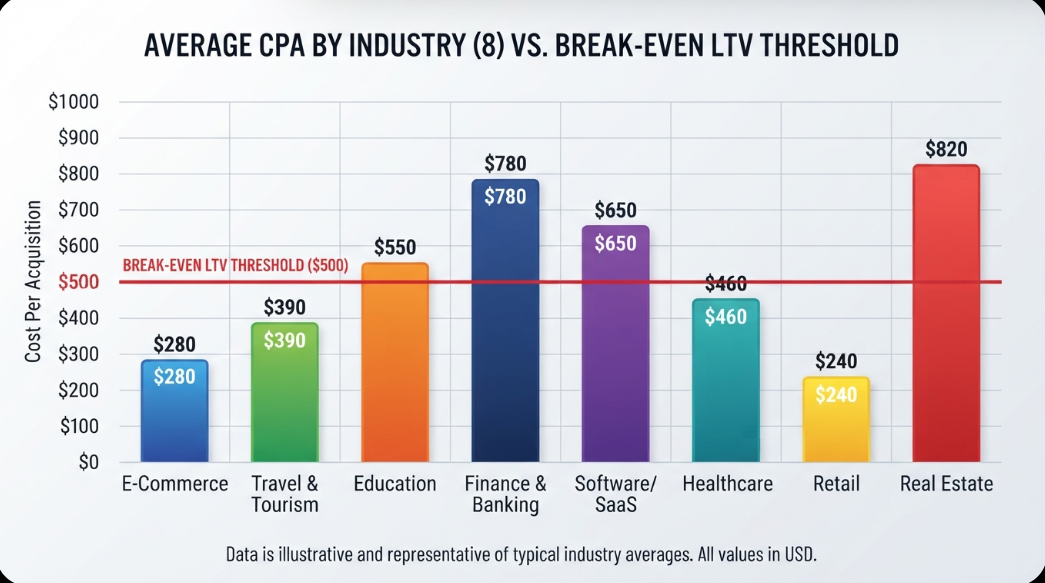
Google Ads is worth it for small businesses only if your average customer lifetime value exceeds $500 and your website converts at 3% or higher. Below those thresholds, you’ll burn $1,000–$3,000 in the algorithmic learning phase before generating a single profitable conversion. The businesses that actually win on Google Ads aren’t spending more than their competitors — they’re targeting high-intent commercial keywords in industries where one closed sale covers an entire month of ad spend.
What Small Businesses Actually Spend on Google Ads (Not the $10/Day Myth)
Most beginner guides still tell you to start with $10–$20 per day. That advice was outdated in 2021 and it’s actively dangerous in 2025.
The average cost-per-click across all industries sits around $2.69 on the Search Network, according to WordStream’s latest benchmark data. But that number is nearly useless for your decision because you’re not competing in “all industries.” You’re competing in your zip code, against businesses with dedicated PPC managers and years of Quality Score history.
Real monthly spend ranges for small businesses by industry:
| Industry | Avg. CPC | Realistic Monthly Budget | Break-Even Timeline |
|---|---|---|---|
| Local services (plumbing, HVAC) | $6–$14 | $1,500–$3,000 | 2–3 months |
| Legal (personal injury, family) | $9–$50 | $3,000–$8,000 | 3–6 months |
| Dental / Medical | $4–$12 | $1,500–$4,000 | 2–4 months |
| E-commerce (niche products) | $1–$4 | $800–$2,000 | 1–3 months |
| B2B SaaS / Consulting | $5–$25 | $2,000–$5,000 | 3–6 months |
The number most small business owners never calculate is the learning phase cost. Google’s algorithm needs roughly 50 conversions within 30 days to fully optimize your campaigns. At a $5 average CPC and a 5% conversion rate, that’s $5,000 in spend before the system starts working efficiently on your behalf.
If your budget can’t sustain that calibration period, Google Ads will feel like a slot machine — and the house always wins during the learning phase.
3 Scenarios Where Google Ads Will Drain Your Budget Fast
Let’s be brutally honest about when Google Ads is a terrible investment. Skipping this section is exactly how most small businesses lose their first $2,000 and swear off paid search forever.
Scenario 1: Your website converts below 2%.
Google Ads sends traffic. Your website closes the sale. If your landing page looks like it was built in 2014, takes four seconds to load, and has no clear call-to-action above the fold, you’re paying $8 per click to send real humans to a dead end. Fix your conversion rate before spending a single dollar on ads.
Scenario 2: You’re in a low-margin, low-ticket business.
Selling $25 products with a $10 profit margin? At a $3 CPC, you’d need a 33% conversion rate just to break even. That’s not happening on any platform. Google Ads mathematically favors businesses where a single customer is worth $500 or more over their lifetime.
Scenario 3: You can’t commit to 90 days minimum.
The businesses that quit after month one are the same ones writing “Google Ads is a scam” reviews on Reddit. The algorithm needs data to optimize. Your first 60–90 days are an investment in data collection, not profit generation. If you need immediate cash flow this week, run a local promotion or email blast instead.
3 Scenarios Where Google Ads Generates 5–10x ROI
Now the flip side. When the math actually works, Google Ads is the fastest customer acquisition channel available to small businesses — faster than SEO, faster than social media, faster than referral programs.
Scenario 1: Emergency or urgent-intent services.
Nobody comparison-shops for a burst pipe at 2 AM. They search “emergency plumber near me” and call the first result they see. If you’re a locksmith, emergency dentist, or 24/7 HVAC company, Google Ads captures demand that already exists with purchase intent north of 80%.
Scenario 2: High-value local services with low competition.
Think specialized B2B services in mid-size cities. A keyword like “commercial roof inspection Dallas” might carry a $4 CPC with only three competitors bidding. One $15,000 roofing contract covers an entire year of ad spend in a single afternoon.
Scenario 3: Businesses with strong backend monetization.
A chiropractor might break even on the first visit generated from a Google Ads click. But if their average patient stays for 18 months of recurring appointments, the lifetime value makes the initial $40 acquisition cost an absolute no-brainer.
The pattern is unmistakable: Google Ads rewards high-intent searches in high-LTV industries. Everything else is an uphill battle against better-funded competitors.
Google Ads vs. SEO vs. Facebook Ads — Which Actually Delivers for Small Business?
This is where most comparison articles give you a useless “each channel has its pros and cons” non-answer. Here’s the real breakdown based on aggregated small business campaign performance data.
Speed to first result:
Google Ads delivers qualified leads within 48 hours of campaign launch. SEO takes 4–12 months to generate meaningful organic traffic. Facebook Ads can generate brand awareness in days, but qualified leads typically require 2–6 weeks of pixel optimization and audience refinement.
Cost per acquisition reality:
For local service businesses, Google Ads averages $30–$80 per lead. Facebook Ads averages $15–$45 per lead but with significantly lower purchase intent — more tire-kickers, fewer buyers. SEO’s effective CPA drops to $5–$15 per lead after month 12, but you’re front-loading 6–12 months of content investment with zero leads during the build phase.
The actual recommendation for most small businesses:
Start with Google Ads for high-intent, bottom-of-funnel keywords in your service area. Run SEO in parallel for long-term organic growth and compounding returns. Use Facebook Ads exclusively for retargeting website visitors who didn’t convert on their first visit — not for cold prospecting.
This three-layer approach is what the top 10% of small business advertisers actually deploy. The other 90% pick one channel, overspend, and blame the platform.
small business marketing budget breakdown
The Hidden Costs of Google Ads Nobody Warns You About
Here’s the thing agencies don’t put in their pitch decks. The cost-per-click is just the sticker price. The real cost of running Google Ads includes four line items most small business owners never budget for — and they add up fast.
1. Management fees: $500–$2,000 per month.
Unless you’re running campaigns yourself (which requires 5–10 hours per week of active optimization and continuous learning), you’ll need a PPC manager or agency. Budget 10–20% of your total ad spend on management, with a $500/month floor regardless of spend level.
2. Landing page development: $1,000–$5,000 upfront.
Sending paid traffic to your homepage is the single biggest budget killer in small business PPC. You need dedicated landing pages with clear CTAs, trust signals, and sub-two-second load times. Tools like Unbounce or Instapage cost $99–$199/month on top of initial development.
3. Click fraud and invalid clicks: 5–15% of total spend.
Competitors clicking your ads, bot traffic, and accidental mobile clicks eat into your budget silently every single day. Google refunds some invalid clicks automatically, but independent studies from ClickCease show the average small business loses 8–12% of their ad spend to fraud that goes undetected.
4. The opportunity cost of the learning phase: $1,000–$5,000.
As covered earlier, your first 60–90 days are data-gathering months. Budget this as a sunk cost, not a loss. The businesses that treat the learning phase as a strategic investment come out profitable in quarter two. The ones that panic and pause campaigns at day 30 start over from zero.
Total real first-year cost for a small business: $8,000–$25,000 when you factor in ad spend, management fees, landing page tools, and learning-phase burn. If that number makes you flinch, Google Ads may not be the right channel for you yet — and that’s a perfectly valid conclusion.
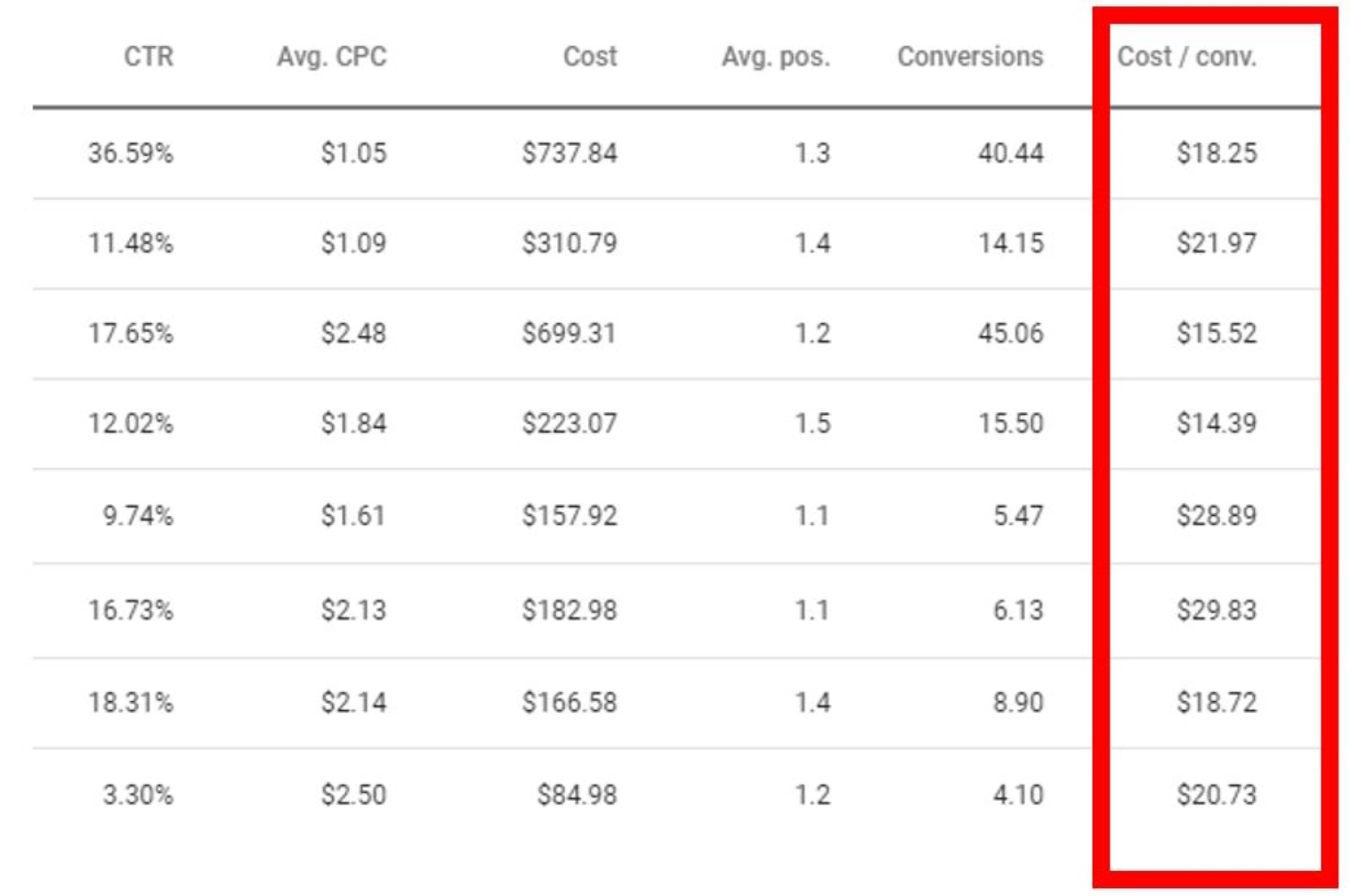
If you’re about to sign a $2,000/month agency contract right now, pause for a second. Do you know your exact customer lifetime value and current website conversion rate? If the answer is no, you’re handing a blank check to a stranger. Run the $500 test below first — it takes 14 days and will save you thousands if the math doesn’t work for your specific business.
How to Run a $500 Google Ads Test That Gives You a Definitive Answer
Stop guessing based on blog articles and Reddit threads. Here’s a 14-day testing framework that tells you whether Google Ads will work for your specific business — before you commit thousands of dollars.
Day 1–2: Foundation setup.
Create your Google Ads account. Install conversion tracking on your website — form submissions, phone calls, purchases, whatever counts as a lead for your business. This step is non-negotiable. Running ads without conversion tracking is the equivalent of driving blindfolded.
Day 3–5: Build one search campaign.
Target 5–10 exact-match keywords with clear commercial intent. Not “what is [your service]” — target “[your service] near me,” “[your service] cost,” and “best [your service] [your city].” Set your daily budget to $35 and use manual CPC bidding to maintain control.
Day 6–12: Let it run without touching it.
Resist the urge to tweak bids, pause keywords, or rewrite ad copy. The algorithm needs a minimum of 7 days of uninterrupted data. Check your search terms report on day 10 to add negative keywords — irrelevant queries that are wasting your budget on clicks from people who will never buy.
Day 13–14: Analyze three metrics only.
Look at cost per click, conversion rate, and cost per acquisition. If your CPA is below your customer lifetime value, scale the budget aggressively. If your CPA exceeds your LTV, fix your landing page or keyword targeting before spending another dollar.
The $500 test removes emotion from the decision entirely. You’ll walk away with real performance data instead of opinions — and that data is worth more than every article on this topic combined.
Google Ads conversion tracking setup guide
Google Ads ROI Benchmarks by Industry (2024 Data)
Before you commit your marketing budget, check where your specific industry falls. These benchmarks come from aggregated WordStream and LocaliQ data across 18,000+ small business accounts.
High-ROI industries where Google Ads is typically worth the investment:
- Legal services: $9.19 average CPC, 6.98% conversion rate, $70–$120 CPA. A single personal injury case can return $5,000–$50,000 in revenue, making even expensive clicks wildly profitable.
- Home services (HVAC, plumbing, roofing): $6.40 average CPC, 7.2% conversion rate, $45–$90 CPA. Emergency service calls convert at 2–3x the average rate because urgency eliminates comparison shopping.
- Medical and dental practices: $6.32 average CPC, 5.6% conversion rate, $50–$100 CPA. High lifetime patient value ($3,000–$15,000 over five years) makes the acquisition math straightforward.
Moderate-ROI industries where it works with tight targeting:
- Real estate: $2.47 average CPC, 3.7% conversion rate, $60–$150 CPA. Long sales cycles make attribution tricky, and you’ll compete against Zillow and Realtor.com for top positions.
- E-commerce: $1.16 average CPC, 3.2% conversion rate, $25–$60 CPA. Your product margins determine everything — a 60% margin makes this viable, a 20% margin does not.
- B2B services: $3.33 average CPC, 4.1% conversion rate, $50–$120 CPA. Works best for high-ticket consulting and SaaS where a single contract is worth $5,000+.
Low-ROI industries where you should proceed with caution:
- Restaurants and food service: $0.82 average CPC, 2.1% conversion rate. Low ticket size plus low search intent equals tough math that rarely pencils out.
- Brick-and-mortar retail: $1.20 average CPC, 2.5% conversion rate. Offline attribution is extremely difficult to track, making it hard to prove ROI with confidence.
Frequently Asked Questions About Google Ads for Small Business
How much should a small business spend on Google Ads per month?
Most small businesses should budget $1,500–$3,000 per month for their first 90 days on Google Ads. This covers ad spend, the algorithmic learning phase, and enough conversion data to optimize campaigns effectively. Businesses in competitive industries like legal, insurance, or home services typically need $5,000–$8,000 monthly to win local ad auctions consistently.
How long does it take for Google Ads to work for small business?
Expect 60–90 days before your campaigns are fully optimized and generating consistent, measurable ROI. The first 30 days are data collection, days 30–60 are active optimization, and days 60–90 are scaling what works. Businesses that pause campaigns before day 60 almost never capture the compounding returns of algorithmic learning.
Is Google Ads better than Facebook Ads for small business?
For capturing existing demand — people actively searching for your service right now — Google Ads outperforms Facebook Ads by 2–4x on conversion rate. For generating new demand among audiences who don’t yet know they need your product, Facebook Ads holds the advantage. Most small businesses benefit from starting with Google Search Ads, then layering Facebook retargeting on top.
Can I run Google Ads myself or do I need an agency?
You can manage basic search campaigns yourself if you’re willing to invest 5–10 hours per week in learning, optimization, and performance analysis. For budgets exceeding $3,000 per month or highly competitive industries, a certified PPC manager typically pays for themselves through reduced wasted spend, sharper keyword targeting, and measurably higher conversion rates.
The Bottom Line — Should Your Small Business Run Google Ads?
Google Ads is worth the investment if your business sits at the intersection of high customer lifetime value, high search intent in your market, and a website that actually converts visitors into leads. It is not worth it if you’re selling low-margin products, your website needs a complete rebuild, or you need profitable results within 30 days to keep the lights on.
The $500 test outlined above will give you a clearer, more reliable answer in two weeks than any article — including this one — ever could. Run the test. Trust the data it produces. Scale what works and ruthlessly kill what doesn’t.
If you’ve made it this far, you already know more than 90% of small business owners about how paid search actually works — and more importantly, how it fails. So here’s the real question: do your LTV and conversion rate numbers hit the thresholds outlined in the opening paragraph?
If yes, set up that $500 test this week. If no, invest in conversion rate optimization and local SEO first. Google Ads will still be there when your fundamentals are solid — and it’ll cost you significantly less when you’re finally ready to scale.
Bookmark this page. Share it with a fellow business owner who’s about to sign an agency retainer they don’t need yet. And if you want a deeper breakdown of where your marketing dollars should actually go, read our complete small business marketing budget guide.
